Wilma Bosch—Theo Bosch
The CallerWilma Bosch’s bond with Theo Bosch is shown through a mother’s urgent wish to keep her young son within reach, and through the devastation that follows when his independent walk into the woods ends in his death. Before the hike, her fear is dismissed as excessive; afterward, the danger is no longer hypothetical, and her grief becomes physical and inescapable.
A Mother Watching the Road
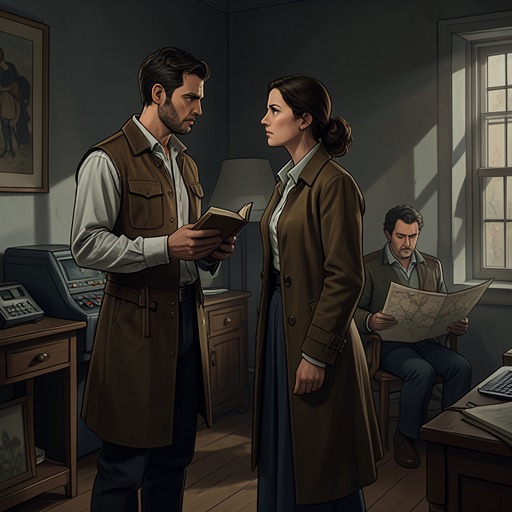
Theo is eight when he sets out toward Snellevann. His father, Hannes Bosch, watches him disappear around a bend, but Wilma’s attention stays fixed on the possibility that the walk may go wrong. She moves to the window facing the road, her clogs striking the wooden floor. She cannot see Theo from there; the gesture brings her no information or control, but it is her attempt to be closer to him as he leaves.
Wilma gives her anxiety concrete form. She imagines Theo slipping on rocks, striking his head and falling into the water; she points to snakes, grazing cows and moose that may attack when they have young. Her concern is not expressed as a general dislike of the outdoors but as a series of bodily dangers confronting a child she considers helpless. The emphatic fact for her is his age: he is only eight.
Protection and the Fear of Losing Control
Hannes answers her warnings by asking what she is really afraid of. He argues that the woods contain acorns and hares, and later compares Theo’s risks with dangers that could befall an adult. Wilma’s fear, however, is not settled by that comparison. She admits that she hates it when Theo leaves the house and is outside her control; his absence makes her feel powerless.
That admission sharpens the relationship’s central tension. Wilma’s care is bound up with vigilance: she wants Theo safe, but safety seems to her to require knowing where he is and being able to intervene. Hannes recognizes the force of her distress, yet at this point he treats the danger lightly, laughing at her fears and imagining the family drinking wine on the porch while the boy remains in the woods. Their disagreement places Wilma’s protective impulse against Hannes’s confidence that Theo’s outing is ordinary. The scene does not suggest that she can prevent every risk; it shows how painful that limit is for her even before the outcome is known.
The News of Theo’s Death
When Wilma and Hannes reach the police cordon, Wilma insists that Theo is on a hike in the woods and was going to Snellevann. She believes he is probably already on his way home, and asks what has happened beyond the roadblock. Konrad Sejer asks them to tell him about their boy before revealing the news. Wilma supplies Theo’s full name and age, still speaking from the expectation that he can be found and brought back.
Konrad Sejer then tells her that the boy they have found is dead. Wilma pulls herself away from Hannes and starts across the road toward the covered body, but Konrad Sejer holds her back. Her knees buckle as she struggles to get up. The movement expresses the bond in its starkest form: she is drawn toward her son even when she cannot reach him, and the effort to cross the distance becomes a collapse onto the ground.
Grief After the Attack
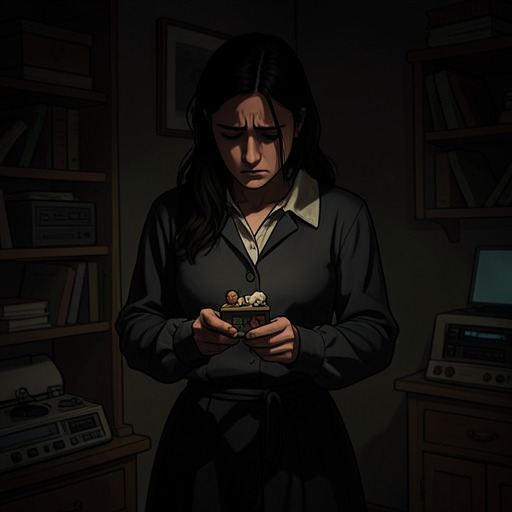
The explanation of Theo’s fate makes the loss more terrible. He was attacked by several dogs, possibly an entire pack; they lunged at him and tore through his body. Wilma is taken to Central Hospital and treated for shock. The narration renders her grief through the sensation of teeth and claws cutting into her own bone marrow, as if the violence done to Theo has entered her body too. She screams, as Theo screamed, and after strong calming medicine puts her to sleep, she wakes and continues screaming.
The contrast with her earlier fears is severe. Wilma had tried to name the hazards of Theo’s walk and keep him close by worrying over them, while the fatal danger came in the form of a dog attack. The story does not make her anxiety responsible for what happened, nor does it imply that vigilance could have saved him. Instead, the gap between a mother’s wish to anticipate danger and the reality of an unforeseeable catastrophe gives their relationship its tragic shape: the boy she feared might be helpless in the woods is gone, and her protective attention has nowhere left to go.